Summary
Digital Product Passports are primarily a product data and governance project. Start with identifiers and a canonical catalogue, then standardize fields and supplier workflows before scaling.
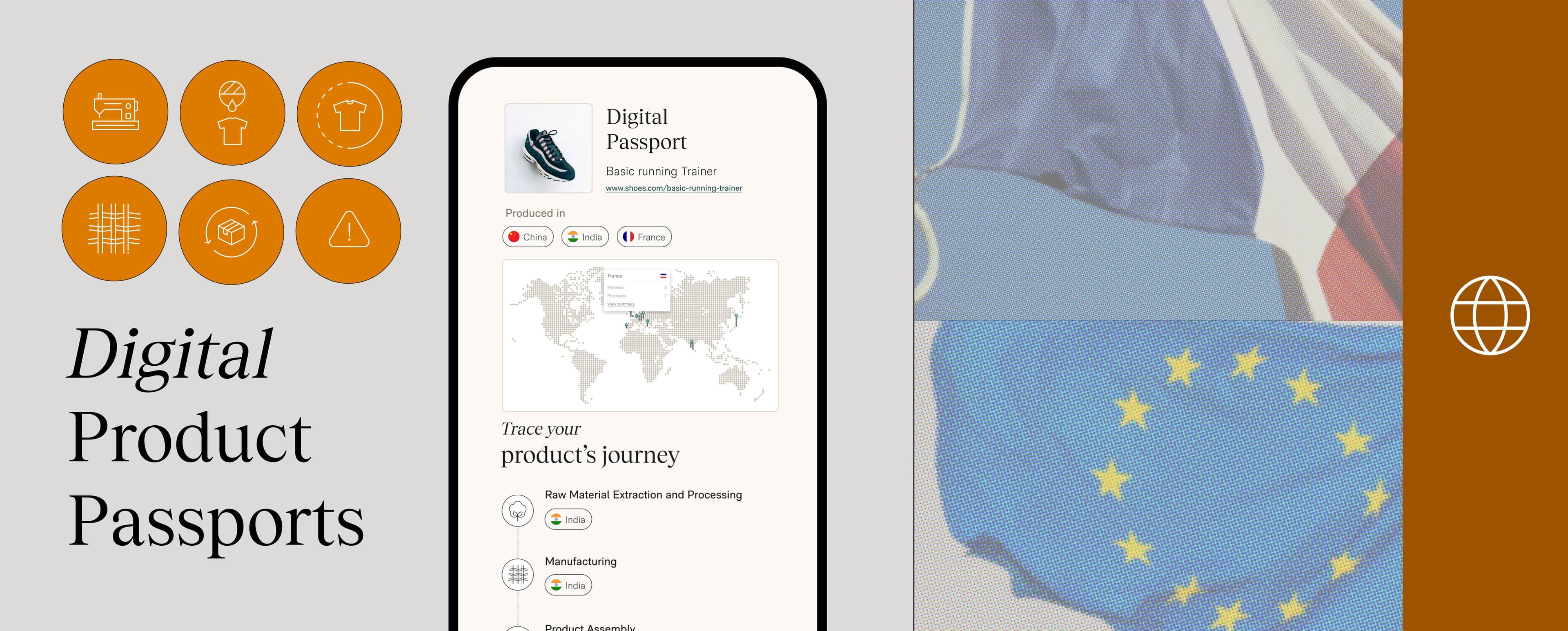
The Digital Product Passport (DPP) is a core building block of the EU’s Ecodesign for Sustainable Products Regulation (ESPR). In practice, a DPP is a standardized, digital record of product information that can be shared across the value chain — from suppliers and manufacturers to brands, regulators, and consumers.
Key idea
For most teams, DPP readiness isn’t a “QR project”. It’s a product data and governance project: identifiers, structured fields, supplier workflows, validation, and versioning.
What you’ll learn
What a DPP is (and what it isn’t), and how it relates to ESPR.
What data you’ll need
Typical DPP fields plus a practical minimum data foundation checklist.
How to implement
A 30/60/90-day roadmap to pilot, validate, and scale.
Avoid common pitfalls
The issues that slow down DPP programs — and how to prevent them.
What is a Digital Product Passport?
A Digital Product Passport is a digital record that contains structured information about a product, such as:
- product identifiers and variants
- manufacturer / brand information
- material composition and origin
- sustainability metrics (where applicable)
- repair, reuse, and recycling information
Access is commonly provided through QR codes or NFC tags attached to the product, packaging, or documentation — linking users to a digital page that presents the passport information.
ESPR vs DPP: what’s the relationship?
ESPR is the regulatory framework that sets sustainability and information requirements for product groups. DPPs are one mechanism used to deliver and standardize the required information.
The exact DPP requirements (data fields, scope, and timelines) are expected to vary by product category, typically defined through delegated acts.
Why the EU introduced the Digital Product Passport
The EU’s goals include:
- supply chain transparency (traceability and accountability)
- enabling a more circular economy (repair, reuse, recycling)
- reducing environmental impact
- improving consumer access to trusted product information
For companies, DPPs are also a way to demonstrate ESPR compliance with fewer manual requests and less fragmented documentation.
What information must a DPP include?
While exact fields depend on the product group, many DPPs typically require:
- unique product identifier (SKU, model, GTIN, etc.)
- manufacturer / importer details
- material composition (including restricted substances where relevant)
- origin (manufacturing location and key components)
- environmental footprint indicators (category-dependent)
- repair & maintenance instructions
- end-of-life guidance (recycling, disassembly)
Practical checklist: the minimum data foundation
If you want a “do this now” baseline, ensure you can reliably maintain:
- a canonical product catalogue with stable identifiers
- a versioned data model (so changes don’t break compliance)
- supplier data collection workflows (what you ask for, when, and how you validate it)
- auditability: who provided which data and when it changed
Which industries are affected?
Digital Product Passports are expected to apply to many sectors, including:
- textiles
- electronics
- batteries
- construction products
- furniture
More categories will be added over time, and requirements will evolve as standards mature.
A practical implementation roadmap (30 / 60 / 90 days)
In 30 days: map data and gaps
- inventory current product data sources (PIM, ERP, PLM, spreadsheets)
- define the product identifier strategy (including variants)
- list likely required data fields for your product group
- identify gaps and “hard data” owned by suppliers
In 60 days: standardize and govern
- design a structured product data model (including validation rules)
- set up roles and responsibilities (who owns what fields)
- build a supplier data request workflow (and a way to track evidence)
In 90 days: pilot a DPP end-to-end
- publish DPP pages for a small product set
- generate QR codes and test scanning flows
- verify that updates (new materials, new supplier, changed footprint) propagate cleanly
- define what “compliance-ready” means internally (review + sign-off)
Common pitfalls (and how to avoid them)
- Treating DPP as a “QR project”: the work is data readiness and governance.
- No source-of-truth: if your PIM/ERP/PLM disagree, your DPP will drift.
- No versioning: regulatory and product changes need a controlled lifecycle.
- Supplier data bottlenecks: make requests structured, repeatable, and validated.
How Tracii helps with Digital Product Passports
Tracii helps brands and manufacturers create ESPR-aligned Digital Product Passports by providing:
- structured product data management
- QR-code based product passports
- automated compliance documentation
- consumer-facing transparency pages
This helps teams reduce manual work, improve data quality, and scale transparency without reinventing tooling for every product line.
FAQ
Is a Digital Product Passport mandatory under ESPR?+
ESPR enables DPP requirements and can make them mandatory for specific product groups. The precise scope and timeline depend on the product category and delegated acts.
What’s the difference between a DPP and a sustainability report?+
A DPP is a structured, product-level record meant to be accessed and updated across the product lifecycle. A sustainability report is typically a company-level document and is not designed for item-level traceability.
How do consumers access a DPP?+
Most implementations use a QR code or NFC tag that links to a digital record, often displayed as a web page optimized for mobile.
How do we prepare for DPP requirements now?+
Start with product identifiers and a canonical catalogue, then standardize data fields and implement supplier workflows. A small pilot (one product line) is the fastest way to prove your end-to-end process.
What information should we prioritize first?+
Prioritize data that is hardest to obtain later: material composition, component origin, and supplier-provided evidence. Then add repair and end-of-life information to support circularity requirements.